Friday, May 22, 2020

THE PLATEAU AND DESERT REGIONS (PART 4)


Hope you all are reading the chapter from the book as well. Today we will learn about The Great Indian Desert. But first let's understand what a desert is....


Deserts are areas that receive very little or no rainfall. The temperatures here are extreme, either very hot or very cold. There is little vegetation growth in such regions.

Let us learn about The Great Indian Desert...


  Sand dunes 👇


Camel is the main animal of a hot desert region. 


Physical features of the Great Indian Desert


Thar Desert is covered with sheets of sand which form sand dunes at places.


Let's know a little bit about the climate of this region


Task 1

(Continue writing after the third question in your sst notebook) Just mention today's date.

Q.4 Why is camel called the 'ship of the desert'?

Ans. 
Camel is called the "Ship of Desert" because it is the only means of transport in deserts. It helps people to go from one place to another easily in the desert. It has humps which stores food and water and helps the camel to survive in the desert region for long and dry periods. 


That's all for today!! 


Thursday, May 21, 2020

THE PLATEAU AND DESERT REGIONS (PART 3)


Welcome Back!!


Let's take a look at the answers first.


 Now, let's watch a video.


So, how is the climate over there?

The Malwa Plateau region has a pleasant climate because of its elevation. In other parts of he Southern Plateau, the summers are hot and dry and winters are cold.

Have you ever thought about the crops and minerals found in this region? Let's take a look

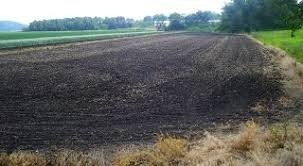
The soil in this plateau region is black and red in colour.


Black soil 

Crops grown in Deccan plateau 
1. Cotton


2. Oilseeds


3. Rice


4. Millets


5. Groundnut


6. Sugarcane


Different kinds of woods from the thick forests of Western Ghats and north-eastern region of the plateau are widely used for commercial purpose.

** Slopes of Nilgiri hills are used for cultivating coffee, tea, pepper and cardamom.**

Coffee Crop
Coffee beans

Tea Farming


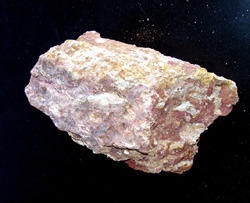
What are the minerals found in southern plateau region?


Bauxite
       
Task-1 

(Continue writing after the first question in your sst notebook) Just mention today's date.

Q.2 Why are the Central Highlands good for agriculture?


Ans. Central Highlands are good for agriculture because of its mineral rich fine black soil. Farming is the main occupation of people living there.

Q.3 Differentiate between Deccan rivers and Himalayan rivers.

Ans. The Deccan rivers are seasonal and are dependent on rain for water where as the Himalayan rivers are fed by melting snow in mountains.


Task-2

Learn the questions and answers done in your notebook.

We will learn about The Great Indian Desert in the next class. 


Tuesday, May 19, 2020

THE PLATEAU AND DESERT REGIONS (PART 2)

A very good morning to all the boys!!


 Let's begin.......

We have studied earlier that river Narmada divides Southern Plateau into two parts, the Central Highlands in the north and the Deccan Plateau in the south.

In the previous blog we learnt about Central Highlands and today we will learn about the Deccan Plateau.

The Deccan Plateau


Deccan Plateau is the largest plateau in India.


It extends from river Narmada to the southern tip of peninsular India.

Western Ghats includes the Nilgiri Hills, the Annamalai Hills and the Cardamom Hills. The hills of Western Ghats are higher than that of Eastern Ghats. Both join each other at Nilgiri Hills.

The Central Highlands and the Deccan Plateau 👇


Now, we will study about the Rivers of this region. 


Godavari is the longest river of the Deccan Plateau region.

Dams across Deccan Rivers 👇


Let's do some classwork in your social studies notebook.

      Task-1

  • write the date on the top left side of the margin.
  • write the name of the chapter on the first line.
  • copy the work in neat cursive handwriting.


Q.1 What is a Plateau? Name the rivers which originate in the Peninsular Plateau region of India.

Ans. A plateau is a highland which is higher than the land around it and has a flat table-like top. It is also called a table land.

Mahanadi, Godavari, Krishna and Kaveri are the main rivers originating in this region.

Task 2

Try to do this on your own  ( in the reader) answers will be shared in the next blog. 


That's all for today.
God Bless!!

Monday, May 18, 2020

THE PLATEAU AND DESERT REGIONS (PART 1)


Today we are going to start a new chapter. The name of the chapter is- The Plateau and Desert Regions.

By the end of the lesson, you will be able to :-
  • understand plateau and will know about southern plateau.
  • learn about the Central highlands and the Deccan Plateau.
  • acquire knowledge of climate, soil, vegetation, wildlife and minerals of the plateau region.
  • retain knowledge about the Great Indian Desert.


WHAT IS A PLATEAU?


A plateau is a high land which is almost flat (table like) at the top. It is also known as tableland.


THE SOUTHERN PLATEAU


FROM THE SOUTH OF THE NORTHERN PLAINS TO THE SOUTHERN TIP OF THE INDIAN MAINLAND LIES A VAST SOUTHERN PLATEAU OF INDIA. THIS PLATEAU COVERS MOST PART OF INDIA. THE LAND HERE IS ROCKY AND UNEVEN. THE SOUTHERN PLATEAU IS BORDERED BY THE FOLLOWING:


  • The Aravalli Range on the north-west.

  • The Rajmahal Hills on the north-east.

  • The hilly region called the Eastern Ghats on the east.

  • The hilly region called the Western Ghats on the west.


The plateau region mainly covers peninsular India and is inverted triangular in shape ( as shown in the map), broad in the north and narrow in down as it extends southwards. It is thus called the Peninsular Plateau. 

It covers the states of Madhya Pradesh, Chhattisgarh, Jharkhand, Odisha, Telangana, Andhra Pradesh, Tamil Nadu, Karnataka, Maharashtra and Eastern part of Kerala. The main cities of this region are Bhopal, Indore, Hyderabad, Mysore and Bangalore.

Now, we will learn about the parts of this plateau.

The River Narmada divides the southern plateau into two parts. The northern part is called Central Highlands and the southern part is called Deccan Plateau. 


Now let's learn about Central Highlands


The Malwa Plateau in Central India and the Chota Nagpur Plateau in the east together make the Central Highlands.


The Chhota Nagpur Plateau covers the states of Jharkhand, North-Eastern Chhattisgarh and Northern Odisha. The fine black soil in the Malwa Plateau region is suitable for growth of cotton and oilseeds.  


Let's watch a video for better understanding.


That's all for today!! We'll learn about Deccan Plateau in the next class! Stay Safe.